


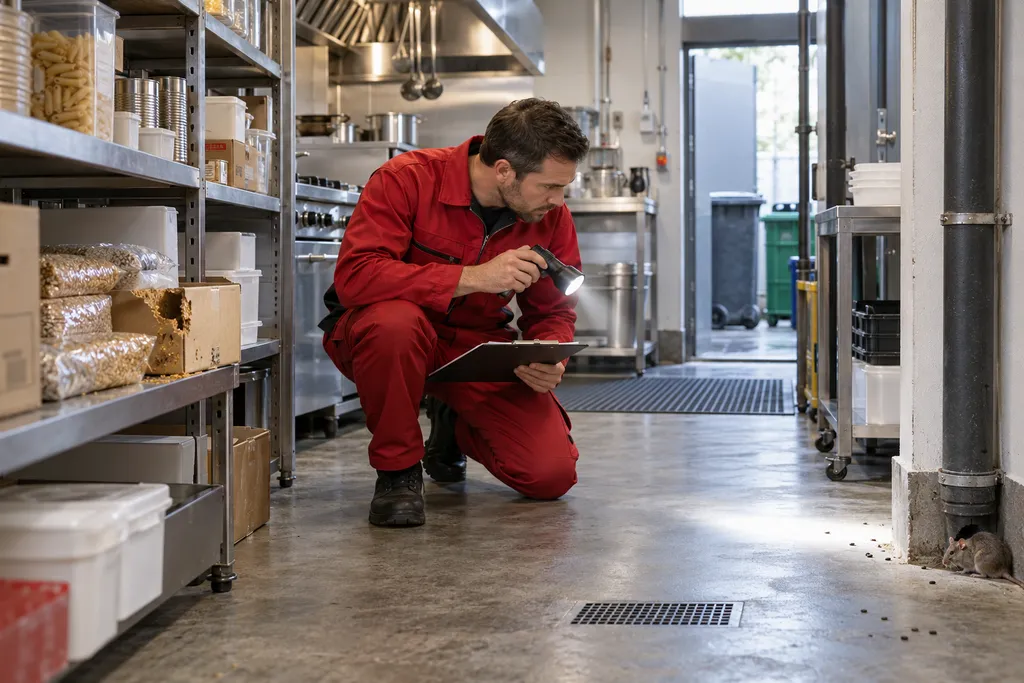
The presence of food, water, and waste in a restaurant or café creates conditions that may attract rodents. Deliveries regularly involve opening access points to service areas, while pipes, ventilation systems, drainage networks, and other utilities provide rats with additional routes through the building. For this reason, the problem cannot be limited to the kitchen alone: the entire connected facility needs to be inspected.
Rats in restaurants may first appear in loading areas, storage rooms, or near waste collection facilities before moving into other parts of the premises. Rats in cafés are not necessarily discovered where food is stored either. Even a single sign of rodent activity deserves attention, as these pests can quickly locate shelter and food sources. Rodents can damage packaging and food stocks, making it unwise to delay control measures. If signs of activity continue to reappear, relying solely on household pest-control methods is not advisable.
Which Areas of Restaurants and Cafés Should Be Monitored for Rat Prevention?
Effective protection begins with monitoring areas where rodents can gain access to food, water, and shelter. Regular inspections should cover not only visible rooms but also technical areas that animals may use to move throughout the premises. This approach helps identify a problem before it spreads to several operational zones. During an inspection, particular attention should be paid to the following areas:
- food receiving areas and doors used for deliveries;
- storage rooms, refrigerated areas, and utility rooms where food products are kept;
- waste collection points and areas surrounding waste containers;
- spaces around pipes, ventilation ducts, and other building utilities;
- technical rooms, entrances, gaps, and hard-to-reach areas;
- adjacent outdoor areas connected to entrances, storage facilities, or service zones.
Regular rodent control in cafés helps keep the premises under observation, but it does not replace inspections of sanitation and maintenance conditions. Rat control in restaurants should take into account food storage practices, waste management, and the condition of vulnerable areas. Prevention should include regular inspections rather than relying only on treatments after rodents have appeared. Effective protection also depends on proper sanitation standards and clearly established procedures for staff.
How to Organize Professional Rodent Control in a Restaurant
The approach to rodent control is particularly important in food service establishments. The first step is to assess the nature of the problem, followed by selecting measures suited to the specific premises and the level of rodent activity. A comprehensive approach makes it possible to address the kitchen, storage rooms, technical areas, and surrounding grounds rather than focusing exclusively on the location where a rodent was discovered.
When professional restaurant rodent control is required in Tashkent, the scope and format of the work are determined according to the characteristics of the establishment. Eurodez specialists inspect the premises, identify areas of rodent activity and potential entry points, and then develop a comprehensive action plan. This approach allows the full range of necessary measures to be addressed instead of focusing on a single location. Follow-up monitoring is important after the work has been completed, as it helps assess the results and detect renewed activity in a timely manner. Effective rat elimination in restaurants also requires advance consideration of food storage conditions, access to technical rooms, and the specific requirements of daily staff operations.
The outcome depends on more than the treatment itself. Regular monitoring, compliance with sanitation requirements, and timely elimination of conditions that attract rodents help maintain protection after the work is completed. Where other sanitation risks are identified, additional disinfection or insect control measures may be included if necessary. The conditions and results of the work are recorded in the required documentation. The same principles apply to cafés, canteens, and other food service establishments.