


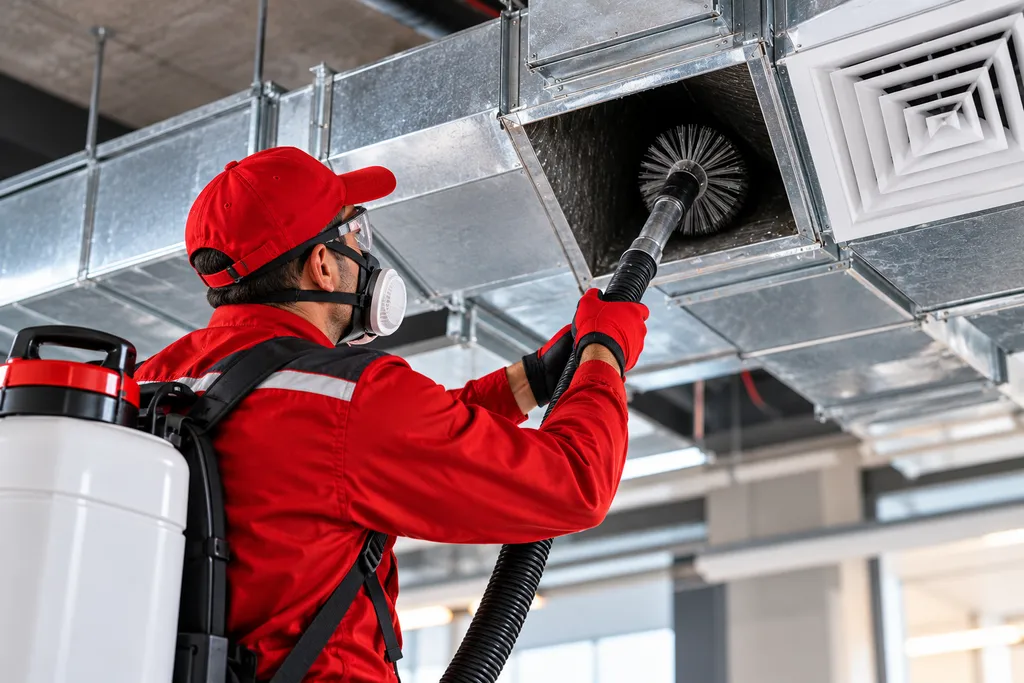
Ventilation provides air exchange in residential, public, and industrial buildings. However, when operating conditions are not properly maintained, contaminants accumulate, or structural defects are present, certain components of ventilation systems may become sources of sanitation problems. Excessive moisture promotes mold growth, while insects and rodents may use service shafts and gaps around air ducts to move between rooms.
In such situations, routine cleaning or treating a ventilation grille may not be sufficient. It is necessary to identify the source of contamination, inspect the condition of building utilities, and select appropriate sanitation measures.
Comprehensive ventilation system treatment may include disinfection, insect control, rodent control, and preventive measures. Each procedure addresses a specific problem, and the need for treatment is determined after inspecting the property.
What Sanitation Problems Can Occur in Ventilation Systems?
Ventilation ducts and associated utilities pass through service rooms, floors, walls, and other structural components of a building. Their condition depends on installation quality, maintenance frequency, humidity levels, and the sanitary condition of surrounding areas.
The most common problems are associated with several factors.
- Accumulation of dust and organic contaminants. Deposits on internal surfaces, filters, and ventilation components can compromise the sanitary condition of the system. When substantial contamination is detected, the need for professional cleaning should be assessed.
- Excessive moisture and mold. Condensation, leaks, inadequate moisture removal, and damp insulation create favorable conditions for fungal growth. Treating mold and fungi without eliminating the source of moisture does not provide a lasting solution.
- Insect intrusion. Cockroaches and certain other pests can move through service openings, poorly sealed joints, and spaces around building utilities. A ventilation shaft may become part of a route connecting different rooms.
- Rodent activity. Rats and mice may use large service shafts, damaged air ducts, cavities between floors, and openings around utility penetrations. Buildings with poorly sealed structural components are particularly vulnerable.
It is important to understand that finding insects near a ventilation grille does not necessarily mean that the air duct itself is infested. The source of the problem may be behind wall coverings, inside a service cavity, in an adjacent room, or near the drainage system.
Ventilation Disinfection, Disinsection, and Rodent Control: What Is the Difference?
Professional sanitation treatment requires accurate identification of the problem. There is no universal product that is equally effective against microorganisms, insects, and rodents.
Ventilation System Disinfection
Disinfection aims to reduce or eliminate specific pathogenic microorganisms on treated surfaces using appropriate methods and products.
When biological contamination is detected, the condition of air ducts, filters, insulation, drainage components, and other elements is assessed first. If dust, mold, or contaminated materials are found, preliminary cleaning, moisture control, or replacement of damaged components may be necessary.
It is important to distinguish disinfection from mechanical cleaning. A disinfectant does not remove accumulated dust, construction debris, or damaged insulation. Sanitation measures must therefore correspond to the actual condition of the system. Chemical products may be used inside air ducts only when their suitability for the relevant surfaces and operating conditions has been confirmed.
Insect Control in Ventilation Systems
Insect control becomes necessary when insects, their hiding places, or entry routes through ventilation systems and adjacent service spaces have been identified. Particular attention should be paid to cockroaches. They can hide in narrow cracks, move along pipes, cables, and structural elements, and enter neighboring rooms through poorly sealed openings.
Professional insect treatment begins with an inspection of potential hiding places. A specialist determines where the main infestation sites are located and which areas require treatment.
Depending on the situation, measures may include localized application of approved insecticides in suitable locations, treatment of adjacent areas, and recommendations for sealing pest entry points. However, insecticides must not be sprayed directly into an operating air supply system unless the safety of that specific application has been confirmed. Treatment products must not contaminate the air delivered to occupied rooms.
Rodent Control in Ventilation Shafts and Service Areas
Rodent control involves a combination of measures designed to monitor, capture, or eliminate rodents and prevent them from entering the property again. If rats or mice are found near ventilation systems, the inspection should cover not only visible system components but also service floors, basements, attics, spaces above suspended ceilings, and areas where building utilities pass through structural elements. Signs of rodent activity may include characteristic noises, gnaw marks, damaged insulation, droppings, and identifiable entry routes.
Professional rodent elimination should be combined with removing accessible sources of food, water, and shelter. Particular attention should be paid to sealing service openings with materials resistant to rodent damage.
Toxic baits must not be placed inside operating air ducts because of the risk of contaminating the system. Rodent control methods should be selected according to equipment locations, access to service areas, and applicable safety requirements.
Why Treating a Single Ventilation Grille Does Not Always Solve the Problem
Consider an apartment building where cockroaches regularly appear in a kitchen near a ventilation opening. After localized treatment, the insects disappear, but they return after some time. The reason may be that the main infestation is located outside the apartment. Insects use shared utilities and gaps in building structures to move between rooms.
A similar situation can occur in commercial properties. If rodents enter a building through damaged sections around building utilities, eliminating the rodents without sealing their entry points will not prevent new animals from entering.
Effective sanitation protection is therefore based on three principles:
- Identifying the source of the problem, rather than treating only the area where pests have been observed.
- Eliminating the existing infestation using suitable methods.
- Preventing reinfestation through structural repairs, sanitation maintenance, and monitoring of vulnerable areas.
When necessary, inspections and treatments are coordinated with the building maintenance team, property management organization, or ventilation equipment specialists.
Specific Considerations for Ventilation Treatment at Different Properties
Restaurants, Cafés, and Food Service Establishments
At food-related facilities, ventilation systems are located near kitchen equipment, storage rooms, food storage areas, and waste disposal zones. Controlling contamination, moisture, and the entry of cockroaches and rodents is particularly important in these environments. Treatment must take into account the location of food products, equipment, work areas, and food production safety requirements. Sanitation measures do not replace mandatory maintenance of kitchen exhaust systems or the removal of grease deposits.
Warehouses and Industrial Facilities
In warehouses, rodents may use building utilities as routes between rooms and storage areas. Risks increase when service openings remain unsealed, structural components are damaged, and loading doors, loading areas, and surrounding grounds are not adequately monitored. A comprehensive program may include inspections of service areas, rodent control, insect control, and recommendations for protecting the building’s structural components.
Hotels, Offices, and Commercial Properties
In buildings containing numerous rooms, the length of utility networks and the presence of shared ventilation shafts must be considered. Finding pests in one area does not necessarily mean that the problem is limited to that location. Inspections may therefore extend to adjacent rooms, service floors, and shared utility spaces. Work is planned to minimize disruption to employees, visitors, and normal building operations.
Multi-Apartment Residential Buildings
In residential buildings, ventilation ducts are often part of the shared building infrastructure. Unauthorized modifications to their structure may disrupt airflow and create additional risks. If cockroaches appear regularly or signs of rodent activity are detected, accessible utility areas should be inspected, and the property management organization should be involved when necessary. Ventilation openings must not be completely blocked. Protective components must preserve the required airflow.
How Is Comprehensive Sanitation Treatment Performed?
Work begins by identifying the nature of the problem and the technical characteristics of the property.
- Stage One — Inspection. Accessible ventilation components, adjacent service spaces, potential pest entry points, signs of contamination, and moisture sources are examined.
- Stage Two — Selection of Measures. Specialists determine whether disinfection, insect control, rodent control, mechanical cleaning, or repairs to building structures are necessary. Not all procedures need to be performed simultaneously.
- Stage Three — Property Preparation. Access to service areas, equipment protection, temporary restrictions on the use of certain spaces, and safe working conditions are coordinated.
- Stage Four — Sanitation Measures. Treatment is carried out in areas where the selected methods can be applied safely and are technically appropriate. Specialized contractors may be involved when ventilation equipment requires cleaning or repair.
- Stage Five — Prevention and Monitoring. Results are evaluated, accessible pest entry points are addressed, and the need for follow-up inspections is determined.
This procedure helps prevent treatments from being carried out without understanding the underlying causes of an infestation.
How to Prevent Insects and Rodents from Returning
Prevention begins with maintaining building systems in proper working condition and following sanitation requirements. Ventilation grilles, accessible air ducts, service rooms, and utility penetrations through walls and floors should be inspected regularly. Particular attention should be paid to the integrity of building structures. Damaged areas, unsealed service openings, and gaps around pipes create potential entry routes for pests.
To prevent mold growth, it is important to monitor condensation, drainage system performance, and the condition of insulation. At food service establishments, warehouses, and industrial facilities, preventive measures should ideally be integrated into the building’s overall sanitation monitoring program.
Professional Ventilation System Treatment in Tashkent
When cockroaches appear near ventilation ducts, signs of rodents are found in service areas, or biological contamination is suspected, it is important to identify the source of the problem before starting treatment.
Eurodez is a disinfection and insect control service in Tashkent, providing sanitation treatment and pest management services for residential and commercial properties.
The company’s specialists can help select appropriate disinfection, insect control, and rodent control measures based on the characteristics of the property. The feasibility of treating internal duct surfaces, the need for technical cleaning, and the scope of work are determined separately.
Contact Eurodez for a consultation and an assessment of the situation. A timely inspection helps identify an appropriate treatment method and reduce the risk of recurring sanitation problems.
Research basis of the article: Recommendations from the United States Environmental Protection Agency (EPA) on air duct cleaning, mold control, and preventing pest intrusion through building utility systems. The EPA emphasizes that air duct cleaning should be performed when there is a specific need, rather than as a routine procedure. Eliminating moisture and sources of infestation is essential.