


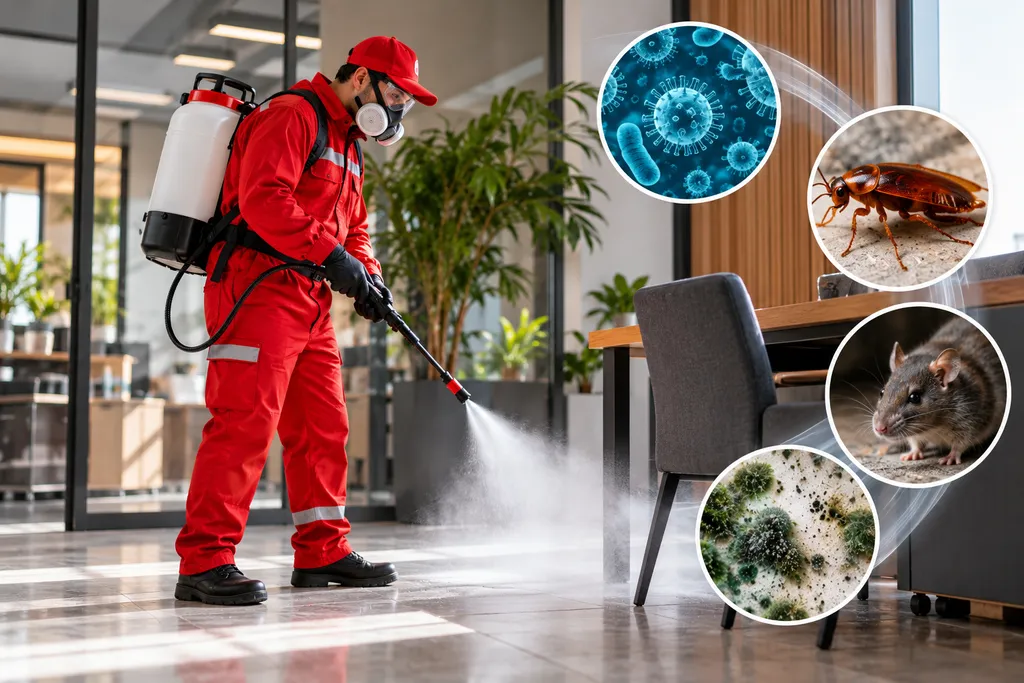
The sanitary condition of a building depends on more than regular cleaning. Businesses, warehouses, restaurants, hotels, and residential buildings may face problems that require specialized measures, including insect infestations, rodent activity, microbial contamination of surfaces, and mold growth.
These sanitary risks are often interconnected. For example, improper storage of food waste attracts insects and rodents, persistent dampness encourages mold growth, and numerous hard-to-reach areas make it more difficult to identify infestation sites. In such situations, an effective solution involves developing a coordinated sanitation program rather than repeatedly applying individual chemical products.
Comprehensive sanitation treatment of premises makes it possible to combine appropriate disinfection, insect control, rodent control, and preventive monitoring measures according to the specific characteristics of a property. The main objective of this approach is not only to eliminate existing problems but also to create conditions that minimize the likelihood of their recurrence.
What Does a Comprehensive Approach to Sanitary Protection Mean?
Comprehensive treatment is neither a single universal procedure nor the mandatory simultaneous application of several chemical products. The term refers to a system of interconnected measures selected after assessing the sanitary condition of a property. Depending on the problems identified, the program may include:
- Disinfection — decontamination of surfaces and environmental objects when there are appropriate sanitary indications.
- Insect control — elimination of insects, including cockroaches, bed bugs, fleas, ants, and other pests.
- Rodent control — measures to monitor, capture, or eliminate rats and mice.
- Additional sanitation measures — mold and fungal treatment, elimination of contamination sources, and preventive recommendations.
- Monitoring — regular assessment of the property to identify signs of infestation in a timely manner.
The need for each procedure is determined individually. For example, if only cockroaches are found in a room, performing disinfection and rodent control without additional justification may be unnecessary. A professional approach involves using methods that directly correspond to the nature of the problem.
What Signs Indicate the Need for Comprehensive Treatment?
Sometimes a sanitation problem is obvious: cockroaches, mice, or traces of mold are discovered in a room. However, less noticeable signs may also indicate the need for a more detailed inspection.
Recurring Pest Activity
If insects disappear only briefly after treatment, the reason may be that the main infestation sites remain active or new insects continue entering the property. For example, cockroaches may hide behind equipment, inside structural gaps, near water sources, and in hard-to-reach service areas. In such cases, repeatedly applying a product without identifying the source of the problem does not always provide lasting results.
Several Types of Pests Present at the Same Time
Some properties may experience several sanitation problems simultaneously, such as cockroaches in utility rooms, signs of mice in storage areas, and excessive moisture in certain zones. Each problem requires a specific solution, but the measures should be coordinated. This makes it possible to account for the operating conditions of different rooms and avoid situations in which treatment in one area interferes with work in another.
Problems Spreading Between Rooms
In large buildings, pests may move between storage, production, service, and staff areas. If infestation sites are located in several zones, localized treatment of a single office, room, or section may be insufficient.
Ongoing Sanitation Risks
For restaurants, food production facilities, warehouses, and hotels, preventing new infestations is just as important as eliminating existing ones. At such properties, a comprehensive program may include periodic inspections and preventive measures.
How Are Disinfection, Insect Control, and Rodent Control Combined?
Each type of sanitation treatment addresses a specific problem. The decision to combine them depends on the risks identified, rather than on the intention to perform as many procedures as possible.
Insect Control: Eliminating Insects and Infestation Sites
Professional insect elimination begins with identifying the pest species and understanding how it spreads. Different approaches are used for cockroaches, bed bugs, fleas, and ants because their behavior, hiding places, and breeding conditions vary. For example, when dealing with cockroaches, attention should be paid to kitchens, utility rooms, areas near equipment, water sources, and food waste.
When bed bugs are detected, inspections focus on furniture, sleeping areas, and adjacent structures. Professional insect treatment therefore involves more than applying insecticides. It also requires locating pest habitats, determining the scope of work, and providing preventive recommendations.
Rodent Control: Protecting Premises Against Rats and Mice
Rodents can damage packaging, products, insulation, and electrical utilities. Their presence may have particularly serious consequences in warehouses, food production facilities, and food service establishments.
- Professional rodent elimination involves identifying areas of activity, entry routes, and accessible sources of food and water.
- Depending on the conditions, traps, other approved control methods, and measures to restrict rodent access may be used.
- However, even effective rodent control cannot prevent animals from returning if holes in walls, damaged doors, or exposed food sources remain.
Rodent management should therefore be accompanied by measures to eliminate the factors attracting them to the property.
Disinfection: Maintaining the Sanitary Safety of Surfaces
Disinfection aims to reduce or eliminate specific pathogenic microorganisms on treated surfaces. It may be required when there are appropriate sanitary indications related to the nature of contamination and the intended use of the premises. However, disinfection does not replace preliminary cleaning. Organic contamination and other deposits may reduce the effectiveness of certain disinfectants.
Mold and fungal treatment requires a separate approach. When fungal contamination is present, it is important to identify the source of moisture, eliminate leaks or condensation, and assess the condition of damaged materials. Without resolving the moisture problem, mold may return even after the surface has been treated. A comprehensive program therefore combines different methods only when their joint application is genuinely justified.
Why Does Comprehensive Sanitation Treatment Require a Systematic Approach?
Sanitation problems rarely depend on a single factor. The spread of insects and rodents may be encouraged by building operating conditions, access to food and water, structural conditions, available hiding places, and insufficient monitoring of the sanitary condition of the premises. Even professionally performed treatment may fail to provide lasting results if the underlying causes of infestation remain unresolved. This is why comprehensive sanitation treatment involves addressing several interconnected tasks in a coordinated sequence.
Identifying Sources of Infestation
Determining why pests have appeared and identifying the nature of sanitation problems are essential first steps. An inspection makes it possible to detect not only obvious infestation sites but also factors contributing to the spread of the problem. Based on the findings, the necessary scope of work is established and appropriate treatment methods are selected.
Coordinating Sanitation Measures
Disinfection, insect control, and rodent control have different objectives and application requirements. When they need to be combined, it is important to organize the sequence of work correctly, consider the compatibility of the products used, and comply with safety requirements.
- A comprehensive approach does not mean that every procedure must be performed. Instead, it allows specialists to develop a program that corresponds to the property’s actual sanitary condition without unnecessary use of chemical products.
Eliminating Conditions That Encourage Reinfestation
Eliminating visible pests is only one component of sanitary protection. To reduce the likelihood of their return, it is necessary to consider the condition of the premises, possible entry routes, access to food resources, and other risk factors. Depending on the problems identified, additional preventive measures may be needed to address the causes of infestation.
Monitoring Treatment Effectiveness
The final component of a comprehensive approach is evaluating the results. This makes it possible to determine whether the objectives have been achieved, whether signs of pest activity remain, and whether additional measures are required. Where ongoing sanitation risks exist, monitoring may be conducted regularly. This helps identify changes promptly and adjust the protection program before a problem becomes widespread.
Thus, comprehensive sanitation treatment aims not only to eliminate existing threats but also to establish a sustainable system of sanitary protection for the property. This approach makes it possible to consider the individual characteristics of the premises and select the most appropriate treatment methods.
One-Time Treatment or Regular Sanitation Services: Which Should You Choose?
Not every property requires ongoing sanitation services. The choice depends on the building’s purpose, intensity of use, and likelihood of reinfestation.
- One-time treatment may be sufficient if the problem is localized, the source of infestation has been identified and eliminated, and conditions do not encourage pests to return.
For example, when a limited insect infestation is found in a residential property, specialized insect treatment followed by preventive measures may be sufficient.
- Regular sanitation services are more relevant for properties where the risk of infestation remains consistently present.
These may include restaurants, food production facilities, warehouses, hotels, shopping centers, and businesses with intensive movement of goods. A maintenance program may include periodic inspections, monitoring activities, evaluation of previous treatment effectiveness, and adjustments to protection methods. The main advantage of regular monitoring is the ability to detect problems at an early stage before they spread across a large area.
What Affects the Effectiveness of Comprehensive Sanitation Treatment?
Results depend on several interconnected factors.
- Accurate diagnosis. Incorrect identification of a pest species or failure to locate the source of infestation may lead to ineffective treatment methods.
- Complete coverage of affected areas. If pests spread between several rooms, all connected areas must be considered.
- Suitability of methods for the property. Products and treatment methods are selected according to the intended use of the premises, the presence of people, food storage conditions, and equipment characteristics.
- Preparation of the premises. Following preparation recommendations helps provide access to the necessary areas and supports safe treatment.
- Elimination of infestation factors. Accessible food waste, leaks, structural gaps, and cluttered areas may contribute to recurring pest activity.
- Post-treatment monitoring. Evaluating the results makes it possible to determine whether the objectives have been achieved and whether additional measures are necessary.
It is the combination of these factors that distinguishes systematic sanitary protection from simply applying individual products.
How to Prepare a Property for Comprehensive Treatment
Preparation depends on the procedures selected and the characteristics of the premises. There are no universal requirements applicable to every type of treatment. Before work begins, it is important to ask specialists which areas must remain accessible, whether furniture and equipment need to be moved, which items should be protected, and whether temporary restrictions on room use will apply.
- At food service establishments and warehouses, particular attention is paid to protecting food products, raw materials, and packaging.
- In residential premises, the presence of children, pets, and individuals who may be sensitive to certain chemicals must be considered.
- If treatment is carried out in an operating office, hotel, or production facility, the work should be coordinated with the property’s operating schedule.
People should return to treated rooms, cleaning should resume, and surfaces should be used again only in accordance with the instructions for the products applied and the specialists’ recommendations.
How to Maintain Results After Sanitation Treatment
Even professionally performed treatment cannot rule out reinfestation if conditions favorable to pests remain.
- To maintain sanitary conditions, it is important to arrange timely waste removal, protected food storage, and regular cleaning of hard-to-reach areas.
- The condition of doors, windows, protective screens, and utility entry points should be monitored.
- In areas with excessive moisture, leaks should be repaired and condensation prevented.
- Warehouses should maintain orderly storage areas and remove unnecessary packaging materials promptly.
- For commercial properties, periodic sanitation monitoring can help track signs of insect and rodent activity.
Preventive measures do not replace professional treatment in cases of significant infestation, but they help maintain the results achieved and reduce the likelihood of recurring problems.
What Determines the Cost of Comprehensive Sanitation Treatment?
The cost of sanitation services is calculated according to the actual scope of work.
- Factors affecting the price include the size of the property, number of rooms, pest species identified, infestation severity, accessibility of affected areas, and the need for additional procedures.
- For example, insect treatment in a small apartment in Tashkent differs from a comprehensive sanitation program for a restaurant, industrial facility, or warehouse complex.
- When choosing a service provider, it is important to compare not only prices but also the scope of the proposed services.
- Customers should clarify whether an inspection is included, which areas will be covered, what methods are planned, and whether follow-up monitoring is necessary.
A professional insect control service should consider the specific circumstances rather than offering the same treatment plan for every property.
Comprehensive Sanitation Treatment in Tashkent by Eurodez
When sanitation problems affect several rooms or recur after individual treatments, it is important to identify their causes and select coordinated measures.
Eurodez is a disinfection company in Tashkent providing disinfection, insect control, rodent control, and other sanitation services.
The company operates in the fields of insect elimination, rodent management, and sanitary protection of various properties. A comprehensive approach makes it possible to select the necessary combination of services according to the purpose of the premises, the nature of the infestation, and the building’s operating conditions.
Contact Eurodez for a consultation, an assessment of the required scope of work, and information about the cost of comprehensive treatment. The company’s specialists can help select appropriate sanitation measures for your property.
Research basis of the article: The principles of Integrated Pest Management (IPM) outlined by the United States Environmental Protection Agency (EPA), including eliminating sources of food, water, and shelter, sealing gaps and openings in building structures, monitoring pest activity, and applying pest control products in a targeted manner. These approaches are also reflected in the World Health Organization (WHO) recommendations for preventing rodents from entering buildings.