


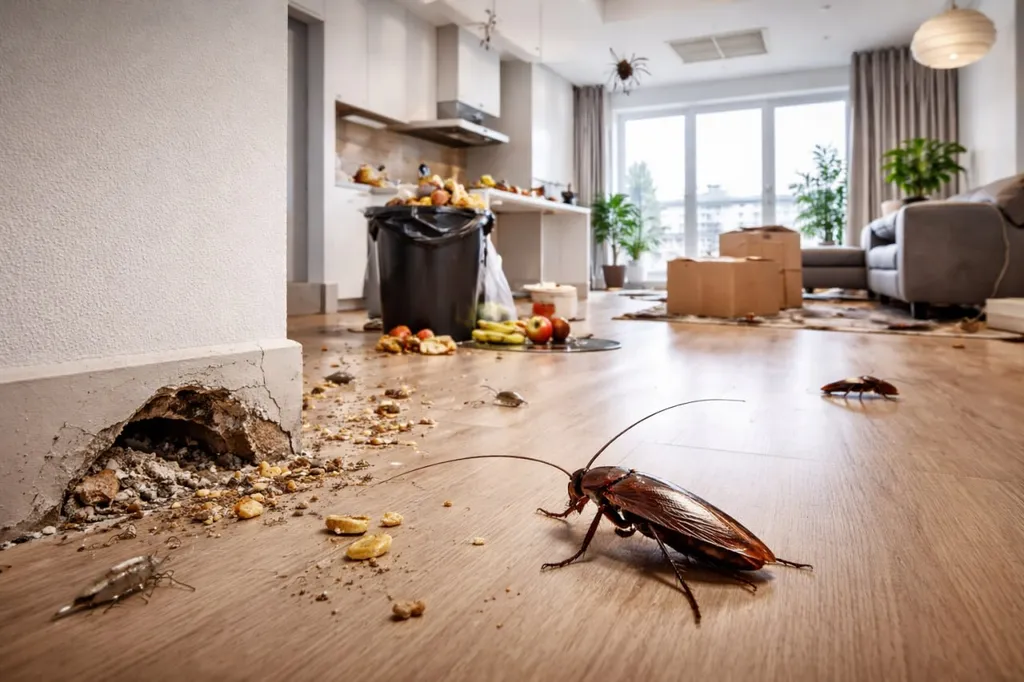
It is commonly believed that a new apartment is fully protected from pests, but in practice this is not always the case. Even in newly built homes, residents may encounter insects within the first months after moving in. The reasons are related not only to external factors but also to how the building is used. Understanding the sources of the problem helps prevent it and maintain cleanliness.
Insects in a new home: causes and spread
Many people think insects only appear in old housing, but that’s not true. The causes of insects in new buildings are quite explainable. One of the main factors is bringing pests in with furniture, appliances, or construction materials. Even packaging may contain eggs or larvae.
Another source is neighbors. Pests can move between apartments, especially if the building is not fully occupied. Questions about where cockroaches come from are often linked to migration from other units or technical areas.
Main causes:
- Insects brought in with belongings and packaging.
- Movement through shared structures.
- Hidden areas where bed bugs and others live.
- Lack of regular sanitation control.
- Rapid reproduction in favorable conditions.

How insects enter new apartments
Even sealed apartments are not fully protected. There are many entry points.
Ventilation systems, utility lines, cracks, and entry zones all play a role. As a result, pests easily get inside.
In such situations, especially if the issue spreads quickly, people look for ways of cockroach control. Many turn to pest control service websites for solutions.
Why repairs and humidity contribute
Construction and renovation create conditions for pests. Waste and leftover materials become shelters.
High humidity in new buildings also contributes. Poor drying creates ideal conditions for insects and microorganisms.
In such cases, calling a pest control service may be necessary.

Prevention and professional pest control
Prevention is key to avoiding infestations.
Main measures:
- Seal cracks and check ventilation.
- Maintain cleanliness.
- Inspect furniture.
- Treat risk areas.
- Control humidity.
If the problem already exists, it’s important to act quickly and order disinfestation.